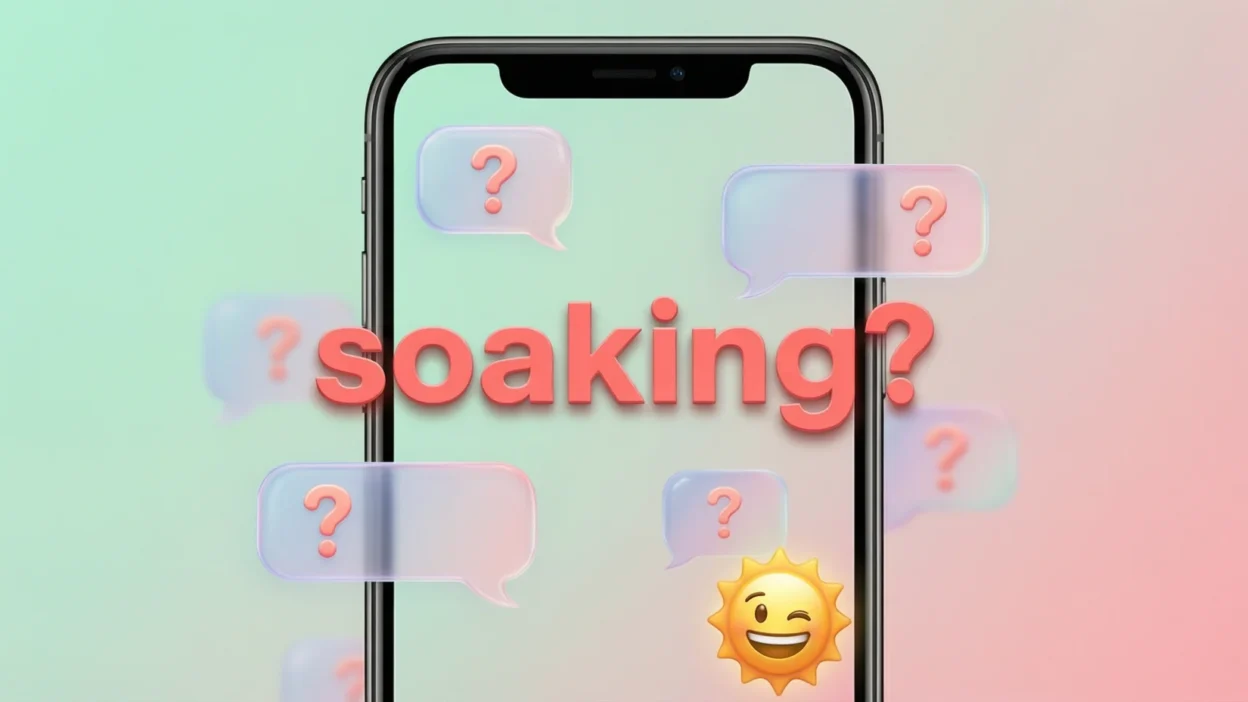
The first time you see the word soaking online, it can feel confusing. Maybe you’re scrolling through TikTok comments, reading a meme, or chatting in a group DM
when someone casually drops the word like everyone already knows what it means. You pause. Soaking? Like in a bath? Or food? You reread the message, trying to figure out the vibe. That moment of confusion is super common. In today’s texting culture, words can take on totally new meanings, especially slang that spreads fast through social media and online chats.
Quick Answer:
Soaking is a slang term that usually refers to a specific type of intimate behavior discussed online, especially in social media jokes and memes.
What Does Soaking Mean in Text?
Soaking does not stand for a full form or abbreviation. It’s a slang term that comes from online conversations and social media culture.
In plain English, soaking is often used to describe a situation where two people are physically intimate but claim they are not “actively” doing anything. Online, it’s mostly talked about in a joking, ironic, or meme based way rather than serious discussion.
People use the term because it sounds innocent, but the meaning surprises people. That contrast is why it spreads so fast in memes, comments, and group chats.
Example sentence:
“wait are they actually talking about soaking or is this just a meme?”
Bold summary:
Soaking is slang used online to describe a specific intimate situation, usually mentioned jokingly or ironically in casual chats.
Where Is the Term Commonly Used?
You’ll mostly see soaking in casual, informal online spaces. It’s not a professional or formal word in this context.
Common places include:
- Text messages and group chats
- TikTok and Instagram comments
- Twitter/X posts and replies
- Reddit threads and memes
- Discord servers and gaming chats
The tone is usually casual and humorous. Sometimes it’s sarcastic or used for shock value. It’s rarely used seriously and almost never in formal writing or work related messages.
Realistic Conversation Examples
Below are natural, lowercase examples that show how people actually use the term in online chats:
- “bro i just learned what soaking means and i regret it 😭”
- “no way this is real soaking sounds fake”
- “tiktok taught me the word soaking and now i can’t escape it”
- “why is everyone joking about soaking today”
- “i thought soaking meant relaxing, not that”
- “every comment section somehow turns into soaking jokes”
- “pls don’t explain soaking to me, i’m scared”
- “internet slang gets weirder every year, soaking is proof”
These examples show how the term is mostly used for reactions, jokes, or disbelief rather than serious conversation.
When to Use and When Not to Use Soaking
✅ When You Can Use It
- In casual chats with friends
- When reacting to memes or viral posts
- In jokes or ironic comments
- In online spaces where slang is normal
❌ When You Shouldn’t Use It
- In professional or work messages
- In formal writing or emails
- Around people who may find the topic uncomfortable
- In public posts without context
Quick Comparison Table
| Context | Example Phrase | Why It Works / Doesn’t |
|---|---|---|
| group chat | “i just found out what soaking means 💀” | casual and shared humor |
| meme comment | “soaking lore goes to go up the wall” | fits internet slang tone |
| work email | “this reminds me of soaking” | inappropriate and confusing |
| school assignment | “soaking is discussed online” | too informal and unclear |
Similar Slang Words or Alternatives
Here are some related or alternative slang terms you might see in similar online conversations:
- “hooking up” a vague term for intimate activity; more common and widely understood
- “down bad” means someone is desperate or overly interested
- “sus” short for suspicious; often used jokingly
- “out of pocket” something unexpected or wild
- “wild” used to react to shocking or surprising info
These alternatives are safer and more flexible, especially if you’re unsure about using soaking directly.
Frequently Asked Questions
1. Is soaking always used in a sexual way?
Online, yes. While the word itself is normal, the slang meaning usually refers to an intimate topic.
2. Is soaking appropriate for texting?
Only in casual, informal chats where everyone understands the slang and tone.
3. Do younger people use this term more?
Yes. It’s mostly used by Gen Z and young millennials on social media.
4. Is soaking a joke or a serious term?
Most of the time, it’s used jokingly or sarcastically, especially in memes.
5. Can soaking be misunderstood?
Definitely. Many people think of bathing or relaxing first, which is why the slang meaning surprises them.
6. Is it used on all social media platforms?
It’s most common on TikTok, Twitter/X, Reddit, and Discord.
7. Should I explain it if someone asks?
You can, but be mindful of the audience and keep it respectful and clear.
Final Thought
So, what does soaking mean in modern texting culture? It’s a slang term that took on a surprising meaning online and spread through memes, jokes, and casual chats.
While the word sounds harmless, its slang use is very specific and informal. Understanding terms like soaking helps you keep up with online conversations, avoid awkward moments, and better read the tone of internet slang. As always, context matters use it carefully and know your audience.