
You’re scrolling through the news, TikTok comments, or a group chat when you suddenly see the phrase “queen consort.” Maybe it popped up during a royal event, a Netflix show about monarchy, or a viral tweet. You pause for a second. Is it the same as a queen? Is it a title, a role, or just fancy royal language?
A lot of people first notice this term online and feel slightly confused because it sounds important but unclear. You’re not alone. Let’s break it down in the simplest, most relatable way no royal history degree required.
Quick Answer:
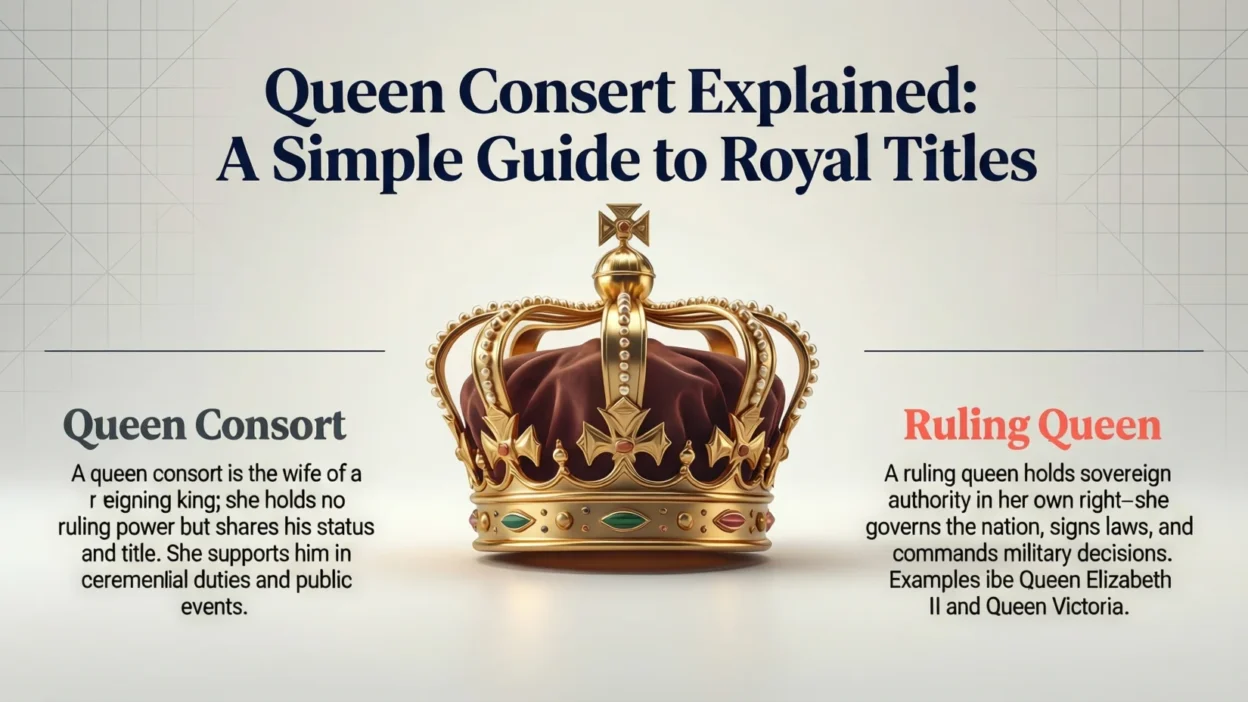
A queen consort is the wife of a reigning king, and her role is supportive and ceremonial, not ruling the country herself.
What Does Queen Consort Mean?
Full form and plain English meaning
The term queen consort is not an abbreviation or texting shorthand. It’s a formal royal title.
In plain English, a queen consort is:
- A woman who becomes queen because she married the king
- Someone who does not rule the country herself
She shares the king’s rank socially, but she does not have political power or authority to make laws.
Why people use this term
People use the phrase queen consort to:
- Clearly explain a queen’s role
- Avoid confusion with a queen regnant (a queen who rules on her own)
- Be accurate when talking about royal titles in news, social media, or history
Simple example sentence
- “she became queen consort when her husband was crowned king.”
Bold summary:
Queen consort means the wife of a king who holds a ceremonial title but does not rule.
Where Is the Term Commonly Used?
You won’t usually see queen consort in casual texting or gaming chats. It’s more common in formal or neutral settings.
Common places you’ll see it:
- News articles and headlines
- Royal announcements
- History books or documentaries
- Social media posts discussing royalty
- Comments on videos about kings and queens
- School lessons or quizzes
Tone of the term
- Tone: formal to neutral
- Not slang: this is not casual internet slang
- Used for clarity: especially when explaining royal roles online
So while it may appear in social media conversations, the tone stays informative, not playful.
Realistic Conversation Examples (Modern Chat Style)
Here are some natural, lowercase examples of how people might talk about queen consort online:
- “wait, she’s not ruling? she’s the queen consort, not the queen regnant.”
- “i just learned queen consort means the king’s wife, not the ruler.”
- “the news keeps saying queen consort and now it finally makes sense.”
- “she has the title, but the power stays with the king.”
- “queen consort sounds fancy but it’s mostly ceremonial.”
- “so a queen consort can’t make laws, right?”
- “history class today explained the difference between queen consort and queen regnant.”
- “twitter is arguing about what queen consort actually means.”
- “netflix made me google queen consort lol.”
These reflect how the term appears in modern online chats, even though it’s a formal title.
When to Use and When Not to Use Queen Consort
✅ Do use it when:
- Talking about royal families accurately
- Explaining historical or current monarchies
- Writing school assignments or articles
- Posting educational content online
❌ Don’t use it when:
- You mean a woman who rules on her own
- You’re joking or using slang
- Talking about fictional queens unless accuracy matters
- Casual texting where “queen” alone is enough
Quick comparison table
| Context | Example Phrase | Why It Works / Doesn’t Work |
|---|---|---|
| news article | “she is the current queen consort” | correct and formal |
| history essay | “the queen consort supported the king” | accurate usage |
| casual text | “you’re my queen consort lol” | doesn’t fit the meaning |
| royal debate | “she’s not queen regnant” | helps clarify roles |
Similar Terms and Alternatives Explained
Understanding queen consort is easier when you compare it to related titles.
Queen Regnant
A queen regnant is a queen who rules in her own right.
- Example: Queen Elizabeth II
- She had full authority as monarch
King Consort
A king consort is the husband of a ruling queen.
- Much rarer than queen consorts
- Often holds no ruling power
Princess Consort
Sometimes used instead of queen consort.
- Chosen to avoid public confusion
- Still means the spouse of a monarch
Monarch
A monarch is the ruling king or queen.
- This title means actual power and authority
Royal Spouse
A general term for someone married to a monarch.
- Less formal, more descriptive
Each term helps clarify who holds power and who holds title.
Frequently Asked Questions (FAQ)
1. Does a queen consort have any power?
No. A queen consort has no political power. Her role is ceremonial and supportive.
2. Is queen consort the same as queen?
Not exactly. A queen consort has the title through marriage, while a ruling queen is called a queen regnant.
3. Can a queen consort become a ruler?
Usually no. The crown passes by birthright or law, not marriage.
4. Is queen consort a modern term?
No. The term has existed for centuries but became more common online due to recent royal events.
5. Is the term used in texting slang?
No. It’s not texting shorthand or social media slang. It’s a formal title that sometimes appears in online discussions.
6. Do younger people use this term?
Mostly when discussing news, history, or pop culture. It’s not everyday youth slang.
7. Why do people get confused by this term?
Because the word queen usually implies power, but queen consort does not rule.
Final Thought
So, what does queen consort mean in simple terms? It means a woman is queen because she married the king not because she rules. In today’s texting culture and online chats, the term often pops up during royal news or viral discussions.
Knowing the difference helps you understand headlines, avoid confusion, and sound informed when the topic comes up. It’s a perfect example of how old royal language still finds its way into modern digital conversations.