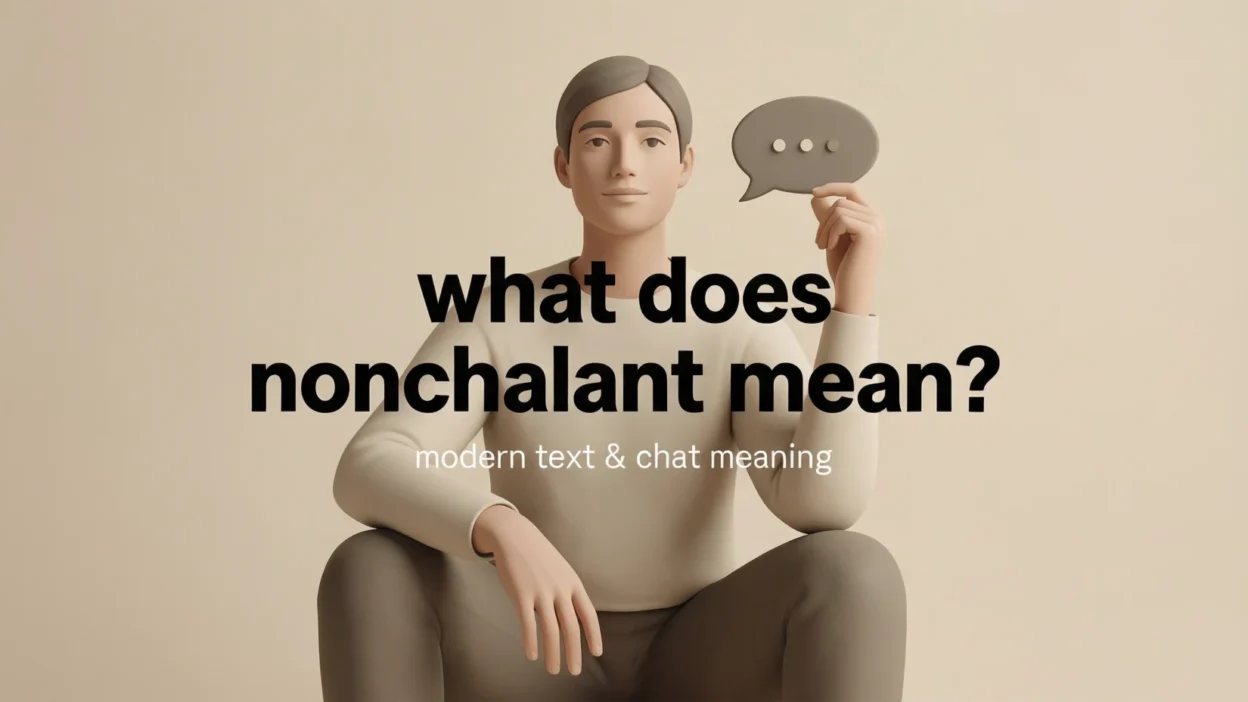
You’re in a group chat, and someone finally replies after hours with just, “yeah, it’s fine.” Another friend jumps in and says, “why are you being so nonchalant?” You stop scrolling for a second. You’ve heard the word before in captions, tweets, maybe even comments but what does nonchalant really mean? Is it rude? Cool? Unbothered?
In today’s texting culture, nonchalant pops up a lot to describe someone’s vibe or attitude, especially online. Once you understand it, you’ll start noticing it everywhere.
Quick Answer:
Nonchalant means acting calm, casual, or unconcerned, even when something might seem important.
What Does Nonchalant Mean in Text?
Nonchalant is not a texting abbreviation and has no short form. It’s a descriptive word that explains someone’s attitude or behavior.
In plain English, nonchalant means not showing much emotion, excitement, or worry. A nonchalant person may seem relaxed, indifferent, or like they don’t care much at least on the outside.
People use nonchalant in text and online chat to:
- Describe someone’s cool or calm reaction
- Call out behavior that feels too relaxed
- Explain a detached or unbothered vibe
Simple example:
“he was totally nonchalant about missing the deadline.”
Bold summary: Nonchalant means calm, casual, and not visibly concerned or emotional.
Where Is “Nonchalant” Commonly Used?
Unlike heavy slang, nonchalant works in both casual and slightly formal settings, which makes it popular online.
Common places you’ll see it:
- Text messages and group chats
- Social media captions and comments
- Twitter/X posts describing someone’s attitude
- Instagram or TikTok comments
- Online forums and discussions
- Casual emails or messages
Tone:
- Casual: ✅ yes
- Informal: ✅ yes
- Neutral: ✅ yes
- Formal: sometimes (depends on context)
It’s more flexible than most social media slang, but tone still matters.
Realistic Conversation Examples (Text Style)
Here are natural, modern examples of how nonchalant appears in real online chats 👇
(all lowercase, like real texting)
- “why are you so nonchalant about this?”
- “he replied hours later and was so nonchalant lol”
- “she’s always nonchalant, even when stuff goes wrong”
- “not him being nonchalant after causing chaos”
- “i wish i could be that nonchalant tbh”
- “his nonchalant energy is kinda annoying”
- “she acted nonchalant but i know she cared”
- “why you so nonchalant today?”
These show how the word fits naturally into texting culture and online chat meaning.
When to Use and When Not to Use “Nonchalant”
Because nonchalant describes attitude, it’s important to use it carefully.
✅ Do use “nonchalant” when:
- Describing someone’s calm or relaxed behavior
- Talking about reactions that seem unemotional
- Explaining a cool or detached vibe
- Chatting casually online or in text
❌ Don’t use “nonchalant” when:
- You want to sound very casual or slangy
- Talking to someone who might take it personally
- Writing super short or playful texts
- Describing serious emotional situations insensitively
Quick comparison table:
| Context | Example Phrase | Why It Works / Doesn’t |
|---|---|---|
| texting a friend | “you’re so nonchalant about it” | casual, descriptive |
| social media post | “his nonchalant attitude says it all” | fits tone |
| emotional argument | “stop being nonchalant” | may sound dismissive |
| playful meme chat | “nonchalant vibes only” | works as humor |
Similar Words and Alternatives to “Nonchalant”
If you don’t want to repeat nonchalant, these alternatives can help, depending on tone and context.
| Word | Meaning | When to Use |
|---|---|---|
| unbothered | not affected or stressed | casual, social media |
| indifferent | not caring either way | neutral, serious tone |
| chill | relaxed and easygoing | informal chat |
| laid-back | calm personality | descriptive, friendly |
| casual | not serious or intense | everyday use |
| detached | emotionally distant | more serious situations |
Each word has a slightly different vibe, but nonchalant often sits in the middle—cool, calm, and neutral.
Frequently Asked Questions About Nonchalant
1. Is being nonchalant a good or bad thing?
It depends. It can mean calm and confident, or it can seem careless or uninterested.
2. Is nonchalant the same as not caring?
Not exactly. Someone can care but still act nonchalant.
3. Is nonchalant slang?
No. It’s a standard English word that’s commonly used in modern online chat.
4. Can nonchalant be used in social media captions?
Yes. It’s popular in captions describing vibes, moods, or attitudes.
5. Who uses the word nonchalant most?
It’s used by Gen Z, millennials, and adults, especially online.
6. Can nonchalant sound rude?
Sometimes. If used during emotional moments, it can feel dismissive.
7. Is nonchalant formal or informal?
It’s mostly neutral, working in both casual and semi-formal contexts.
Final Thought
So, what does nonchalant mean in today’s digital conversations? It describes a calm, relaxed, or seemingly unconcerned attitude, often used to explain how someone reacts or doesn’t react online.
From texting and comments to captions and chats, nonchalant helps people describe vibes clearly without sounding too slangy or too formal. Knowing how and when to use it can make your communication more accurate and expressive in modern texting culture.