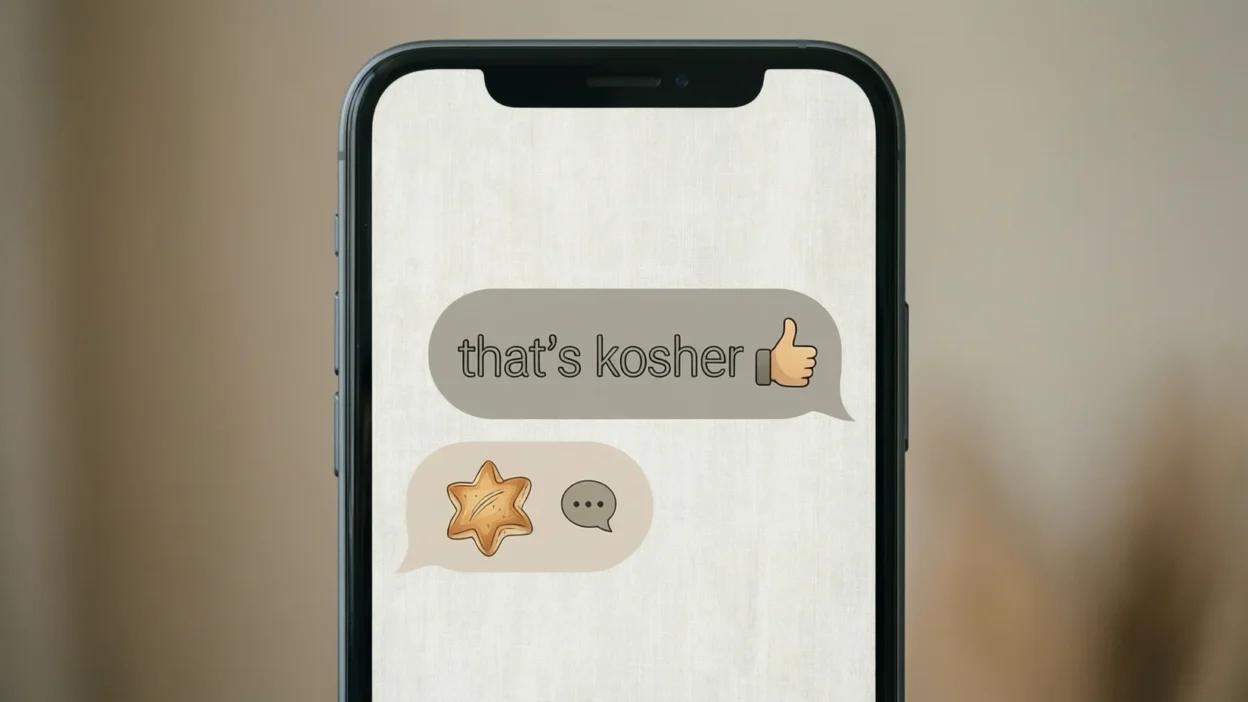
The first time you see the word “kosher” outside of food, it can feel confusing. Maybe a friend texted, “yeah that’s kosher with me,” or you saw it in a comment under a viral post. You pause and think, wait isn’t kosher about food? That’s exactly how many people discover this word online.
Over time, kosher has moved from grocery labels and restaurant menus into everyday chats, DMs, and social media conversations. And once you understand it, you’ll start noticing it everywhere.
Quick Answer:
Kosher means something is acceptable, approved, or okay, especially in casual conversation and online chats.
What Does Kosher Mean in Text and Online Chats?
Is there a full form?
Kosher is not an abbreviation. It’s a real word that comes from Hebrew.
Plain English explanation
Traditionally, kosher refers to food that follows Jewish dietary laws. But in modern texting culture and online slang, the meaning has expanded. When someone says something is kosher, they usually mean it’s fine, allowed, fair, or approved.
In simple terms, it’s another way of saying “that works for me” or “no problem.”
Why people use it
People like using kosher because it sounds casual, friendly, and slightly playful. It’s a softer way to agree without sounding too serious. It also adds personality to messages, especially in informal chat.
Short example sentence
“meeting at 7 is kosher with me.”
Bold summary:
In text and online slang, kosher means something is acceptable, okay, or approved.
Where Is “Kosher” Commonly Used Online?
You’ll mostly see kosher in casual and informal spaces. It’s not stiff or professional, but it’s also not rude.
Common places it appears:
- texting and group chats
- social media comments (twitter/x, instagram, tiktok)
- dms and replies
- online forums and reddit threads
- gaming chats and discord servers
Tone of the word
- tone: casual to neutral
- vibe: friendly, relaxed, conversational
- formality: informal
It works best when people are talking like real humans, not writing official emails or reports.
Realistic Conversation Examples (Text Style)
Below are natural, modern chat examples using kosher in lowercase, just like real online conversations:
- “is it kosher if i log off early tonight?”
- “yeah that plan sounds kosher to me.”
- “we good with this deadline?”
“yep, totally kosher.” - “not sure if sharing that screenshot is kosher tbh.”
- “as long as everyone agrees, it’s kosher.”
- “changing the meeting time is kosher right?”
- “that joke was funny but kinda not kosher.”
- “i checked with the team, we’re kosher.”
These examples show how flexible the word is in everyday texting culture.
When to Use and When Not to Use “Kosher”
✅ When to use kosher
- agreeing with a plan or idea
- saying something is allowed or approved
- checking if something is okay
- casual conversations with friends or peers
- online chats and social media replies
❌ When not to use kosher
- formal business emails
- legal or official documents
- serious religious discussions (unless you mean the food rules)
- situations where the audience may misunderstand the slang meaning
Small comparison table
| context | example phrase | why it works / doesn’t |
|---|---|---|
| group chat | “that’s kosher with me” | casual tone fits |
| social media | “is this kosher?” | common slang usage |
| work email | “this plan is kosher” | sounds too informal |
| legal talk | “is this kosher legally?” | unclear and risky |
Similar Words and Alternatives to “Kosher”
If you want variety in your texting or online chats, here are common alternatives and what they mean:
okay
The most basic and universal option. Works everywhere.
cool
Casual and friendly. Often shows relaxed approval.
fine
Neutral approval, sometimes sounds slightly bored.
approved
Clear but more formal. Better for work chats.
legit
Means something is real, valid, or trustworthy.
acceptable
Polite and neutral, slightly more formal.
all good
Friendly and reassuring, very common in texts.
Each of these can replace kosher depending on tone and audience.
FAQ: Common Questions About “Kosher”
1. Does kosher only mean food?
No. While it originally refers to food rules in Jewish tradition, online and texting slang uses kosher to mean acceptable or okay.
2. Is using kosher offensive?
In casual conversation, it’s usually not offensive. However, it’s best to avoid using it jokingly in sensitive religious contexts.
3. Is kosher slang or a real word?
It’s a real word that has taken on a slang meaning in modern texting culture.
4. Do younger people use kosher in texts?
Yes, but it’s more common among millennials and older gen z users who enjoy expressive slang.
5. Can I use kosher at work?
Only in very casual team chats. Avoid it in formal emails or professional documents.
6. Does kosher mean legal?
Not exactly. Sometimes people use it that way, but it usually means socially or personally acceptable, not legally approved.
7. Can kosher mean “not okay”?
Indirectly, yes. Saying “that’s not kosher” means something feels wrong, unfair, or unacceptable.
Final Thought
So, what does kosher mean in modern digital communication? In simple terms, it’s a friendly way to say something is okay, acceptable, or approved.
While the word has deep cultural roots, its online meaning is casual and widely understood. Knowing when and where to use kosher helps you sound natural, confident, and in tune with today’s texting culture without overthinking it.

Watson is a naming niche expert and the author at Namefluxs.com, specializing in unique usernames, nicknames, and brand name ideas based on modern trends and user intent.