Have you ever been texting a friend, feeling a little stressed, and suddenly they reply with just two letters: “dw”?
The first time most people see it, it can feel confusing. Is it short for something serious? Is it slang? Or did they just typo? Maybe you asked someone for help, apologized for being late, or worried about something small and boom, “dw” shows up on your screen.
If you’ve seen dw in texts, DMs, or online chats and wondered what it actually means (and how to use it without sounding awkward), you’re in the right place.
Quick Answer
DW in text means “don’t worry.”
What Does DW Mean in Text?
DW is a short form of “don’t worry.”
It’s a popular texting abbreviation used to reassure someone, calm them down, or let them know something isn’t a big deal.
In plain English, dw is a friendly way of saying:
- it’s okay
- no problem
- you’re fine
- nothing to stress about
People use dw because typing full sentences can feel slow or too formal, especially in casual chats. Two letters do the job quickly and still sound caring.
Short example:
“sorry i’m late”
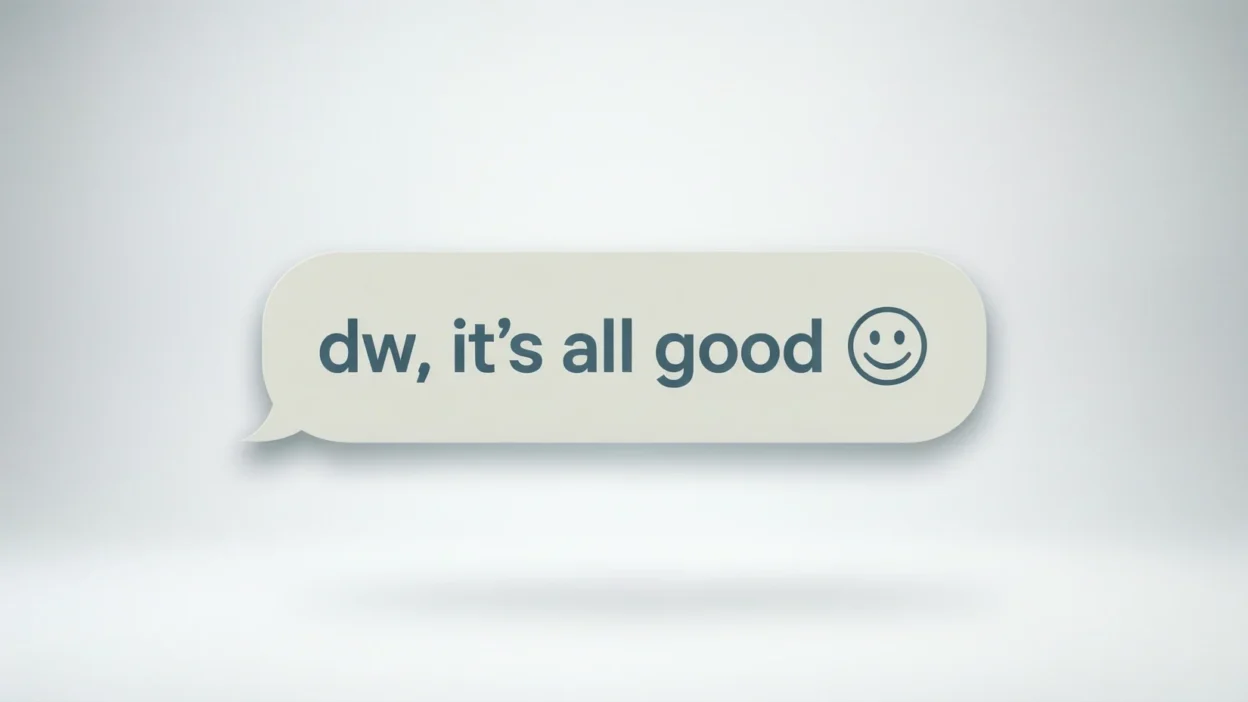
“dw, i just got here too”
Bold summary:
DW means “don’t worry” and is used to reassure someone in casual text and online chats.
Why Do People Use “DW” Instead of “Don’t Worry”?
Texting culture is all about speed, tone, and vibe. DW fits perfectly because:
- it’s fast to type
- it sounds relaxed and friendly
- it avoids sounding too serious
- it matches modern informal chat style
In many situations, typing “don’t worry” can feel a bit stiff or dramatic. DW feels lighter and more natural, especially among friends.
Where Is DW Commonly Used?
You’ll see dw almost everywhere people chat online. It’s especially common in:
- text messages
- whatsapp, messenger, and imessages
- instagram and snapchat dms
- tiktok and twitter replies
- discord and gaming chats
- online forums and comment sections
Tone and formality
- Tone: casual, reassuring
- Formality: informal
- Best for: friends, classmates, teammates, online communities
- Not ideal for: professional emails or serious workplace messages
Realistic Conversation Examples Using “DW”
Here are some natural, modern texting style examples. Notice how casual and lowercase they are.
- “sorry i forgot to reply earlier”
“dw, i was busy too” - “i might be a few mins late”
“dw, take your time” - “i think i messed that up”
“dw, it’s really not a big deal” - “my mic stopped working lol”
“dw, we can still hear you” - “hope i didn’t annoy you”
“dw at all” - “i can’t make it tonight”
“dw, we’ll do it another day” - “i’m bad at this game 😭”
“dw, we’re just playing for fun” - “sorry if that sounded rude”
“dw, i know what you meant”
When to Use and When Not to Use “DW”
Like most slang, dw works great in the right setting but not everywhere.
✅ When to Use DW
- casual chats with friends
- reassuring someone quickly
- relaxed group conversations
- gaming or social media chats
- informal online communities
❌ When Not to Use DW
- work emails or professional messages
- talking to a boss or client
- serious emotional conversations
- formal writing or school assignments
Quick Comparison Table
| Context | Example Phrase | Why It Works / Doesn’t |
|---|---|---|
| texting a friend | “dw, it’s fine” | casual and reassuring |
| group chat | “dw we’ll wait” | friendly and relaxed |
| work email | “dw about the deadline” | too informal |
| serious apology | “dw” | may feel dismissive |
Similar Slang Words and Alternatives to DW
If you want variety or a slightly different tone, here are some common alternatives.
| Slang / Phrase | Meaning | When to Use |
|---|---|---|
| np | no problem | casual replies |
| it’s all good | everything’s fine | friendly reassurance |
| no worries | don’t stress | very common in chat |
| all good | no issue | short and relaxed |
| you’re good | no mistake made | informal reassurance |
| don’t stress | calm down | supportive tone |
| it’s fine | no issue | neutral situations |
Each of these works in informal chat, just like dw, but some sound slightly more caring or more relaxed depending on context.
Common Misunderstandings About DW
Sometimes dw can be misunderstood, especially by people new to texting slang.
- It does not mean “do whatever”
- It does not mean “don’t write”
- It is not rude by default
- Tone depends on context and relationship
In serious moments, dw can sound a little dismissive. If someone is really upset, a longer response is usually better.
Frequently Asked Questions (FAQ)
1. What does dw mean in text messages?
DW means “don’t worry.” It’s used to reassure someone in casual conversation.
2. Is dw polite or rude?
It’s polite and friendly in casual chats. In serious situations, it may sound too brief.
3. Who usually uses dw?
Teens, young adults, gamers, and active social media users use it most but anyone can.
4. Can dw be used on social media?
Yes. It’s very common in DMs, comments, and replies across platforms.
5. Is dw formal or informal?
DW is informal. Avoid using it in professional or academic settings.
6. Can dw mean different things?
In texting culture, it almost always means “don’t worry.” Other meanings are rare.
7. Should I capitalize DW?
Most people write it in lowercase (dw), but uppercase is fine too.
Why DW Matters in Modern Texting Culture
Text slang like dw helps people communicate faster while keeping conversations light and friendly. It shows reassurance without overexplaining and fits perfectly into today’s informal chat style.
Understanding small abbreviations like this can:
- reduce misunderstandings
- help you reply naturally
- make online conversations smoother
In a world where messages are short and fast, dw says a lot with very little.
Final Thought
So, what does dw mean in text?
It simply means “don’t worry.” It’s a quick, casual, and reassuring way to let someone know everything is okay.
Used mostly in informal chats, DMs, and online conversations, dw is a small abbreviation with a friendly purpose. Just remember to match the tone to the situation, and you’ll use it like a pro.

Watson is a naming niche expert and the author at Namefluxs.com, specializing in unique usernames, nicknames, and brand name ideas based on modern trends and user intent.