You’re scrolling through comments or reading a post, and suddenly you see the word “congruent.” Maybe someone wrote, “that explanation isn’t congruent with the facts,” or a friend used it in a serious-sounding message. You pause. It feels familiar, but also a little academic. Is it slang? Is it math? Is it just a fancy way to say “matching”?
If you’ve ever wondered why people use congruent online or what it really means in simple terms, you’re in the right place. Let’s break it down in a way that actually makes sense.
Quick Answer:
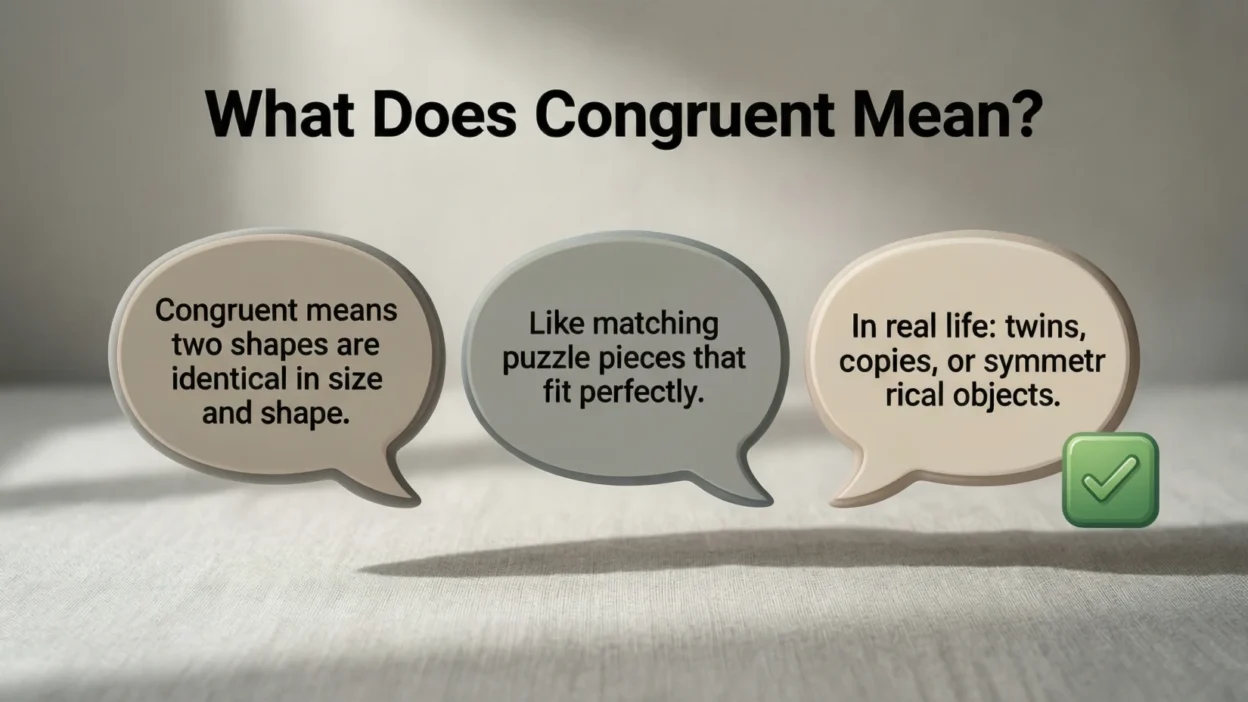
Congruent means things match, agree, or fit together perfectly.
What Does Congruent Mean in Text and Everyday Language?
Congruent is not an abbreviation or slang term. It’s a real English word that comes from Latin, meaning “to agree” or “to come together.”
Plain-English meaning
When something is congruent, it lines up well with something else. The ideas match. The facts agree. The behavior fits the words.
People use congruent when they want to say that two things are consistent or aligned.
Why people use it
- To sound clear and precise
- To explain agreement between ideas
- To point out when things do or don’t match
- To sound thoughtful or professional
Simple example sentence
“his actions are congruent with what he promised.”
Bold summary:
Congruent means two or more things match, agree, or fit together in a clear and logical way.
Where Is the Term Congruent Commonly Used?
You’ll see congruent in many places, both online and offline. It’s not slang, but it does show up in digital conversations.
Common places you’ll find it
- Social media comments (especially debates or explanations)
- DMs and private chats
- Online forums and Reddit threads
- School or college discussions
- Work emails or professional chats
- Psychology, math, and philosophy content
Tone of the word
- Neutral to formal
- Not casual slang
- Sounds thoughtful, educated, or serious
While it’s not super common in quick texting, people do use it online when explaining opinions or correcting information.
Realistic Conversation Examples (Modern Chat Style)
Here are natural, lowercase examples that reflect how people actually use congruent in online chats:
- “that argument isn’t congruent with the data you shared earlier.”
- “his words and actions aren’t congruent at all.”
- “your explanation is congruent with what the article says.”
- “that theory feels congruent with my experience tbh.”
- “the story doesn’t seem congruent with the timeline.”
- “if your goals aren’t congruent with your habits, nothing changes.”
- “her response was calm and congruent with the situation.”
- “those values aren’t congruent with the brand’s image.”
These examples show how the word fits naturally into thoughtful online conversations.
When to Use and When Not to Use Congruent
Using congruent correctly makes you sound clear and confident. Using it in the wrong place can sound awkward or forced.
✅ Do use congruent when:
- Comparing ideas, beliefs, or facts
- Talking about consistency or alignment
- Explaining logic or reasoning
- Writing thoughtful comments or messages
❌ Don’t use congruent when:
- Chatting casually with friends
- Making jokes or memes
- Talking about simple matches (like outfits)
- Using slang-heavy or playful messages
Quick comparison table
| Context | Example Phrase | Why It Works / Doesn’t |
| debate comment | “that claim isn’t congruent with the evidence” | works: clear and logical |
| school discussion | “your answer is congruent with the lesson” | works: formal tone |
| casual text | “this pizza is congruent” | doesn’t work: too serious |
| joke chat | “that meme is congruent lol” | doesn’t work: wrong tone |
Similar Words and Alternatives You Can Use
If congruent feels too formal, there are plenty of alternatives depending on the situation.
| Word | Meaning | When to Use |
| consistent | stays the same, reliable | everyday writing |
| aligned | working together smoothly | goals, values, plans |
| matching | looks or fits the same | casual talk |
| in agreement | shares the same view | discussions |
| coherent | makes sense together | writing or explanations |
| compatible | works well together | relationships, systems |
If you’re texting friends, consistent or aligned often sound more natural than congruent.
FAQ: Common Questions About Congruent
1. Is congruent slang?
No. Congruent is a standard English word, not slang or an internet abbreviation.
2. What does congruent mean in texting?
In texting or online chat, it still means matching or agreeing, but it’s usually used in more serious or thoughtful messages.
3. Is congruent a math word?
Yes. In math, congruent means shapes are the same size and shape. But online, it’s used more broadly.
4. Does congruent sound formal?
Yes. It sounds neutral to formal, not casual or playful.
5. Can teenagers use congruent?
They can, but it’s more common among older teens, college students, or adults who like precise language.
6. Is congruent the same as equal?
Not exactly. Equal means the same amount. Congruent means things match or align in meaning or form.
7. Can congruent be used on social media?
Absolutely. It’s common in comments, threads, and posts that involve explanation or debate.
Final Thought
So, what does congruent mean in today’s digital world? It simply means things match, agree, or fit together logically. While it’s not casual slang, it’s a powerful word when you want to sound clear, thoughtful, and precise in online conversations.
If you’re commenting on a post, explaining an idea, or pointing out inconsistencies, congruent helps you say, “these things line up” in a smart and confident way.